

Roman Shades for Kitchen Window Above Sink: A Complete Guide
The window above your kitchen sink gets more action than almost any other spot in your home. Between dish duty, meal prep splashes, and constant temperature changes, this space needs window treatments that can handle it all. Roman shades have become a go-to choice for this tricky location, and we'll show you exactly why they work so well—and how to pick the perfect ones for your space.
Why Roman Shades Work Above Kitchen Sinks
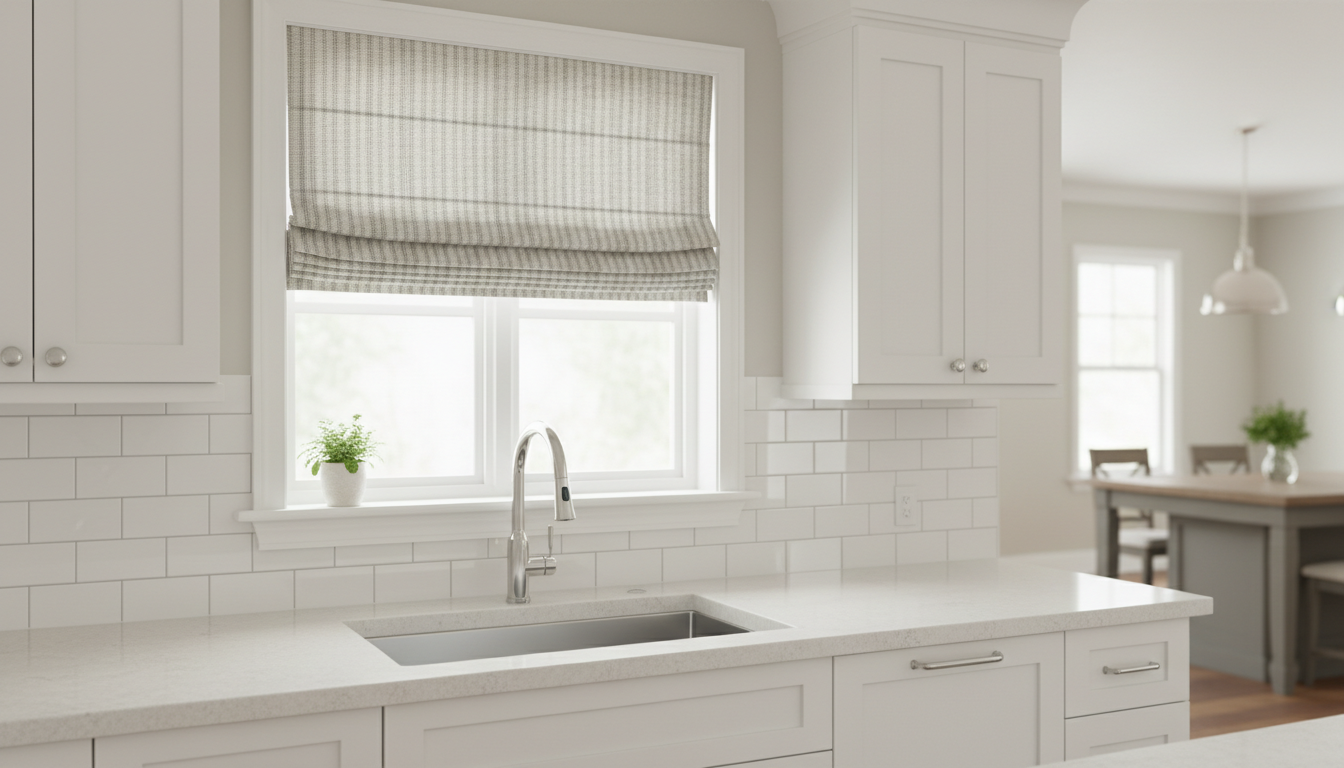
Roman shades bring something special to the table when it comes to above-sink windows. Unlike billowing curtains that can dip into your workspace or get splashed during cleanup, roman shades stack neatly at the top when open and sit flush against the window when closed. This keeps them out of the splash zone while you're tackling dishes or prepping vegetables.
The clean, tailored look doesn't hurt either. Roman shades add softness to a kitchen without the bulk of traditional drapes. They're compact enough for smaller windows—which many above-sink windows tend to be—and they won't crowd the limited space between your cabinets. Plus, they give you precise light control, so you can adjust the shade to block glare while washing dishes or let in natural light when you need it.
We've installed roman shades in dozens of kitchens, and homeowners consistently love how they balance style with practicality. They're just right for that sweet spot where you need something functional but don't want to sacrifice the look of your kitchen.
Choosing Moisture-Resistant Fabrics
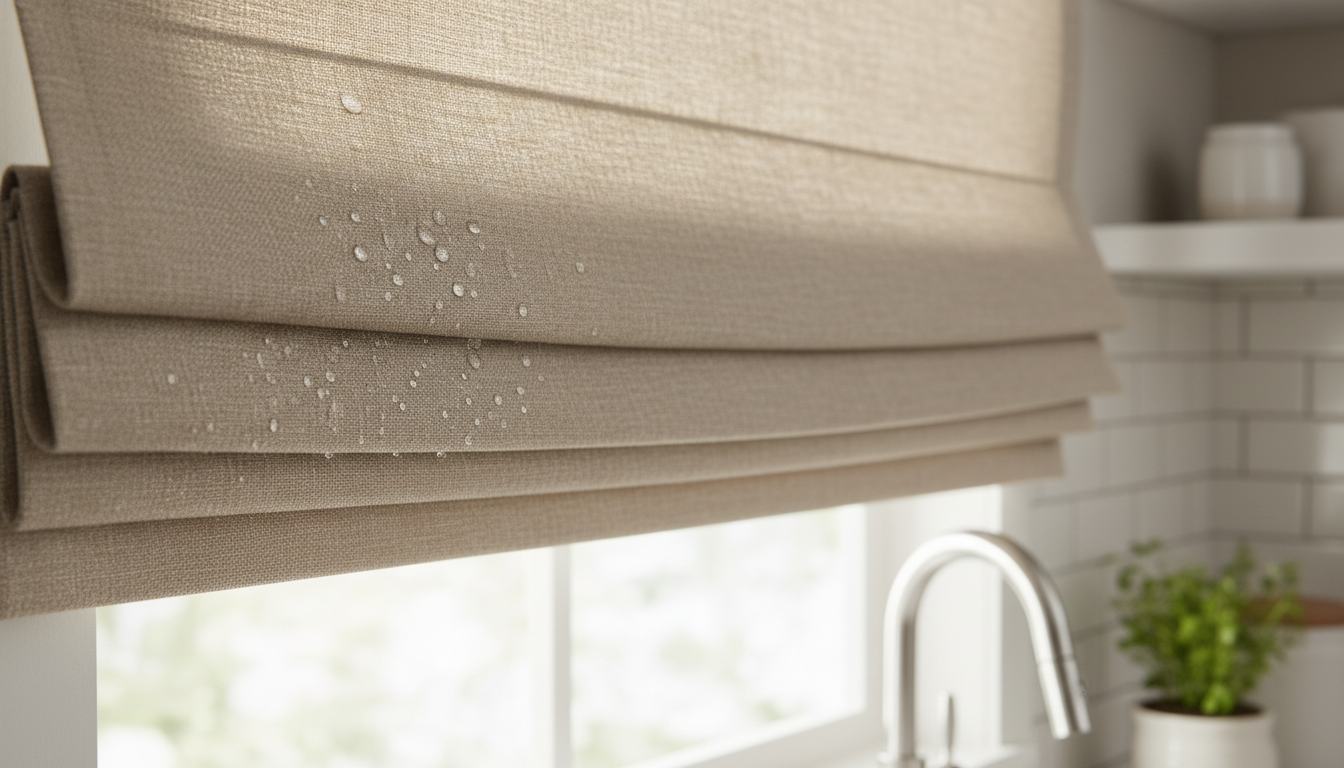
Here's the thing about kitchen windows: they face challenges that bedroom or living room windows never see. Steam from boiling pasta, splashes from rinsing dishes, and the occasional grease spatter from cooking all come with the territory. That's why fabric choice matters more here than anywhere else in your home.
Polyester blends top our list for above-sink windows. They resist moisture damage, hold their color even with lots of sun exposure, and clean up easily when spills happen. Faux linen gives you that expensive, textured look without the maintenance headaches of real linen—it's hypoallergenic, doesn't retain moisture, and shrugs off mold.
Natural materials can work too, but pick wisely. Cotton and cotton blends offer breathability and wash well, making them solid middle-ground options. Bamboo brings natural moisture resistance along with unique texture. The key is looking for fabrics with low porosity that don't hold water for long. We'd skip delicate materials like silk or untreated natural fibers for this spot—save those for spaces that don't see as much action.
If you're dealing with a particularly steamy kitchen, consider treated fabrics with stain-resistant coatings. They cost a bit more upfront, but they'll look better longer and handle the daily grind without showing wear.
Best Styles for Kitchen Function
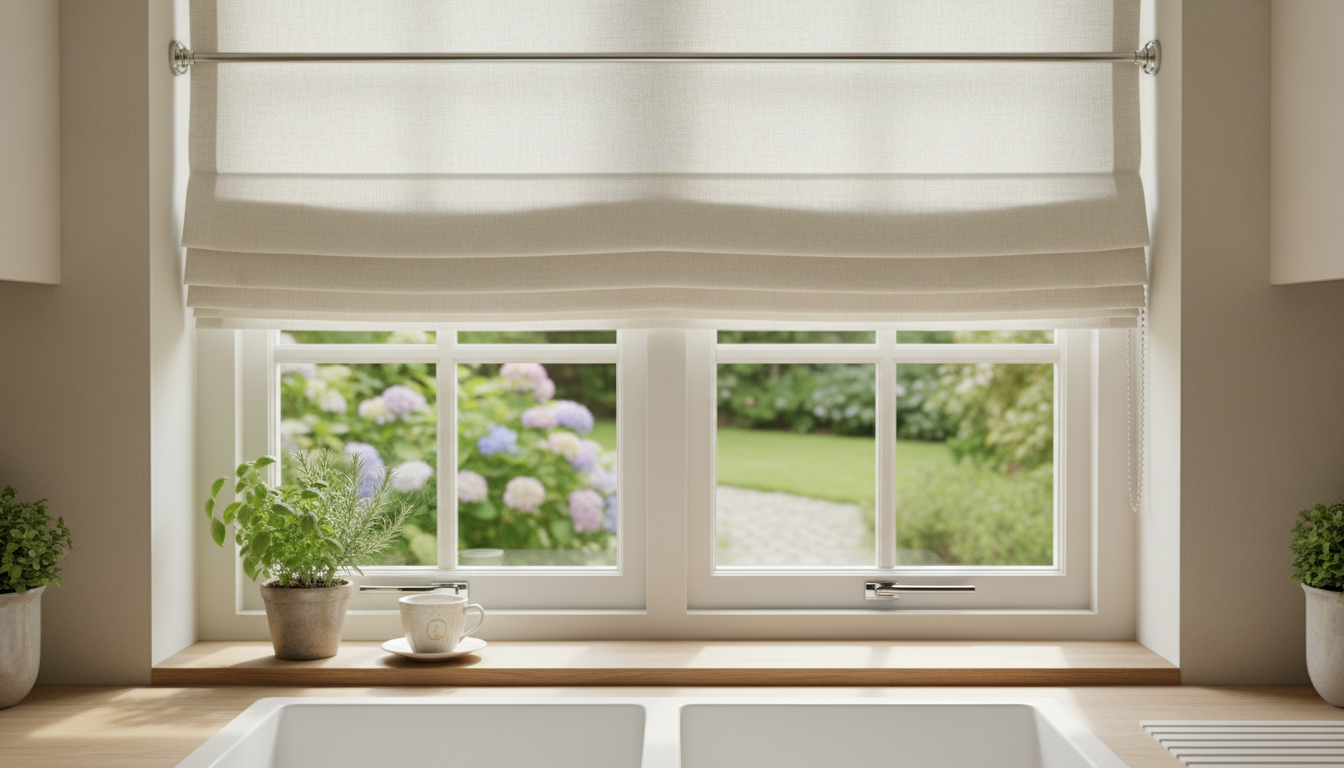
Not all roman shade styles are created equal when it comes to kitchen duty. The style you choose affects both how your shade looks and how well it holds up to kitchen life.
Flat roman shades are the workhorses of kitchen window treatments. When lowered, the fabric hangs smooth and flat. When raised, it forms neat horizontal folds. This streamlined design means fewer crevices for dust and cooking residue to settle into, making cleanup easier. They're also perfect if you've chosen a patterned fabric and want to show it off without interruption.
Cascade roman shades feature aluminum dowels stitched into the back, creating crisp folds that unfurl beautifully when you lower them. They offer a bit more visual interest than flat styles while still maintaining a clean profile. Both flat and cascade styles work with any control type—cordless, continuous loop, or motorized—giving you flexibility.
We'd suggest avoiding heavily pleated or relaxed styles for above-sink locations. Those soft, billowy folds look lovely, but they collect moisture and cooking debris more easily. They're also harder to clean on a regular basis. For windows that aren't directly above sinks or stoves, relaxed styles can add a cozy touch. But for your hardest-working window, stick with flatter, more functional designs.
Browse our collection of roller shades, cellular shades, and zebra shades if you want to compare other low-maintenance options.
Inside Mount vs. Outside Mount
Mounting choice makes a bigger difference than most people realize, especially for kitchen windows squeezed between cabinets.
Inside mounts sit within the window frame, creating a sleek, built-in look. This keeps the fabric tucked away from splashes and steam, which is a huge plus for above-sink windows. The shade won't interfere with your cabinets or backsplash, and it gives you a cleaner, more finished appearance. Inside mounts work best when you have at least 2-3 inches of depth in your window frame for the mounting hardware.
Outside mounts attach to the wall above or around the window frame. They're your go-to when your window recess is too shallow for an inside mount, or when you want to make a small window appear larger. Mounting the shade a few inches above the frame means the folds stack on the wall instead of taking up window space, maximizing light when the shade is raised. This matters when you only have one window in your kitchen and want every bit of natural light you can get.
For windows sandwiched tightly between upper cabinets, outside mounts sometimes become the only practical choice. Just make sure you have a few inches of wall space on each side for the mounting brackets. If your cabinets extend all the way to the ceiling, you might need to mount higher up on the wall with the shade hanging over the cabinet tops.
Color and Pattern Selection
Your kitchen window above the sink is small, but it's also a focal point—you look at it constantly while working in this space. Color and pattern choices can either blend in seamlessly or make a statement.
Neutrals like white, cream, beige, and gray are safe bets that work with any kitchen style. They reflect light, keep the space feeling open, and won't clash if you decide to repaint your cabinets down the road. We see these choices in probably 60-70% of kitchen installations, and they never look outdated.
But don't be afraid of pattern, especially if your kitchen feels a bit sterile. Kitchens often have lots of hard surfaces—tile backsplashes, stainless appliances, square cabinets—so a patterned shade can introduce some welcome softness. Geometric patterns, subtle stripes, or botanical prints add visual interest without overwhelming a small window. Just keep scale in mind: large, bold patterns can look too busy on a compact above-sink window.
For farmhouse or country kitchens, gingham checks or plaids in soft colors bring that cozy, homey feel. Modern kitchens pair beautifully with solid colors in bold hues or graphic patterns with clean lines. Match your shade to existing accents like dish towels, rugs, or even your backsplash tile to create a pulled-together look.
One practical tip: lighter colors show dirt and splatter marks more easily, while medium tones hide minor stains better. If you're someone who'll raise and lower the shade with damp hands while cooking, factor that into your choice.
Cordless and Motorized Options
Control mechanisms matter more in kitchens than anywhere else, simply because you're often using them with wet or messy hands.
Cordless roman shades are brilliantly practical for above-sink windows. You just pull the bottom rail to raise or lower—no dangling cords to get in your way or create safety hazards if you have kids or pets. They offer a cleaner look too, with no cords visible on either side of the shade. Most cordless options use a spring-loaded or friction mechanism that's smooth and easy to operate.
Motorized shades take convenience up another notch. Adjust them with a remote, smartphone app, or even voice commands if you've connected them to a smart home system. Sounds fancy, but think about the reality: you're elbow-deep in bread dough or your hands are covered in marinara sauce, and the afternoon sun is creating glare on your work surface. Being able to say "close the kitchen shade" without stopping what you're doing? That's genuinely useful.
For windows that are harder to reach—maybe your sink is in front of a tall window or your countertop is extra deep—motorization becomes less of a luxury and more of a practical solution. Continuous loop chain systems also work well and tend to be more budget-friendly than motorized options while still offering smooth operation.
Visit aosky.com to explore control options across our entire collection.
Care and Maintenance Tips
Kitchen roman shades need regular attention to keep looking fresh. The good news is that maintenance doesn't have to be complicated.
Dust weekly with a vacuum brush attachment or microfiber cloth. This prevents buildup that becomes harder to clean later. For fabric shades, a quick once-over takes less than a minute and keeps cooking grease from accumulating.
Spot-clean spills immediately—don't let them set. Blot (don't rub) with a clean, damp cloth and mild soap if needed. Test any cleaning solution on an inconspicuous area first to make sure it won't damage the fabric or leave a watermark. Polyester blends and treated fabrics handle spot cleaning better than natural materials.
For deeper cleaning, check the manufacturer's instructions. Some fabrics can handle gentle hand-washing, while others need professional cleaning. Never submerge shades with internal cords or mechanisms in water. Many moisture-resistant synthetic materials can be wiped down with a damp cloth and mild detergent, then air-dried while still mounted.
If you notice mold or mildew starting to form—which can happen in very steamy kitchens—address it right away. A solution of white vinegar and water often works on moisture-resistant fabrics. Prevention is easier than cure: run your kitchen vent when cooking to reduce moisture buildup, and raise your shades occasionally to let air circulate.
For washable roman shades, we've covered detailed cleaning methods in our guide on cleaning and care.
Conclusion
Roman shades offer the perfect balance of style and function for kitchen windows above sinks. By choosing moisture-resistant fabrics like polyester blends or faux linen, opting for functional styles like flat or cascade folds, and selecting the right mounting option for your space, you'll end up with window treatments that work as hard as you do in the kitchen.
Whether you go cordless for easy operation or splurge on motorization for hands-free control, your above-sink window can be both beautiful and practical. Focus on fabrics that resist moisture and stains, pick colors that complement your kitchen's style, and don't forget regular maintenance to keep everything looking fresh. With the right roman shade, that hardworking window above your sink becomes one of your favorite kitchen features.
Frequently Asked Questions
Can roman shades withstand kitchen moisture and steam?
Yes, when you choose the right fabrics. Polyester blends, faux linen, and treated fabrics resist moisture damage and handle humidity well. Natural materials like untreated linen or silk aren't ideal for above-sink locations. Look for fabrics specifically described as moisture-resistant or suitable for high-humidity areas. Proper ventilation in your kitchen also helps by reducing overall moisture exposure.
Should I choose inside or outside mount for my kitchen sink window?
Inside mount works best when you have adequate window depth (at least 2-3 inches) and want a clean, built-in look that keeps fabric away from splashes. Outside mount is better for shallow windows, when cabinets limit your space, or when you want to maximize light by letting the shade stack on the wall above the window. Measure your available space before deciding.
What's the easiest roman shade style to clean in a kitchen?
Flat roman shades are the easiest to maintain because they have smooth surfaces with fewer crevices where grease and dust can collect. Cascade styles with their neat folds come in second. Avoid heavily pleated or relaxed styles for above-sink windows, as their deep folds trap cooking residue and moisture, making them harder to keep clean.
Are cordless roman shades safe for kitchens?
Absolutely. Cordless roman shades are actually safer than corded versions, especially in homes with children or pets. They eliminate dangling cords that can be hazardous, and they're more convenient when you're cooking with messy hands. You simply pull the bottom rail to adjust the shade, which is quick and intuitive.
How often should I clean roman shades above the kitchen sink?
Dust them weekly with a vacuum brush attachment or microfiber cloth to prevent buildup. Spot-clean spills as soon as they happen. Deep cleaning frequency depends on how much you cook and how steamy your kitchen gets—every 3-6 months is typical for most households. Moisture-resistant synthetic fabrics usually just need wiping with a damp cloth and mild soap.
Share