The right motorized blinds depend on two choices: the window covering that handles your light, privacy, and style needs, then the motor, power source, and controls that fit the room. For most homes, a roller shade is the simplest starting point. Zebra, cellular, Roman, and Venetian designs solve more specific problems.
Do not choose the app first. A smart motor cannot make the wrong fabric block more light, insulate a drafty window, or fit a shallow frame. Start at the window and work outward.
Motorized Blinds Types Compared
The main types of motorized blinds are roller, zebra, cellular, Roman, and Venetian window coverings. Roller shades fit the widest range of rooms; zebra shades adjust daylight; cellular shades focus on window comfort; Roman shades lead with fabric style; Venetian blinds direct light with tilting slats. Choose structure first, then power and controls.
Type
Best for
Light and privacy control
Main tradeoff
Roller shade
Bedrooms, media rooms, offices, simple interiors
Depends on fabric: light filtering, solar, room darkening, or blackout
One fabric panel cannot redirect light like slats
Zebra shade
Living rooms and offices with changing daylight
Alternating sheer and solid bands shift from open to private
Small gaps between bands and edges limit true blackout
Cellular shade
Bedrooms, nurseries, and windows that feel hot or cold
Available in light-filtering and blackout fabrics
Pleats can hold dust, and the stack is more visible when raised
Roman shade
Dining rooms, bedrooms, and fabric-led interiors
Fabric and lining set the opacity
Folds need stack space and careful motor sizing
Venetian blind
Rooms needing directional light control
Slats tilt to redirect light while preserving some view
Confirm whether the motor tilts, lifts, or does both
Motorized Roller Shades
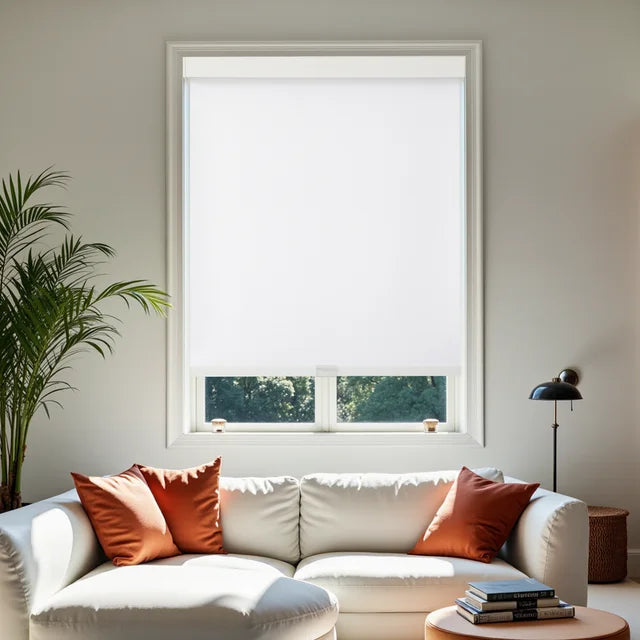
Roller shades use one sheet of fabric wrapped around a tube, which is why they pair so naturally with a tubular motor. The mechanism is compact, cleaning is simple, and the room result is easy to predict once you choose the fabric.
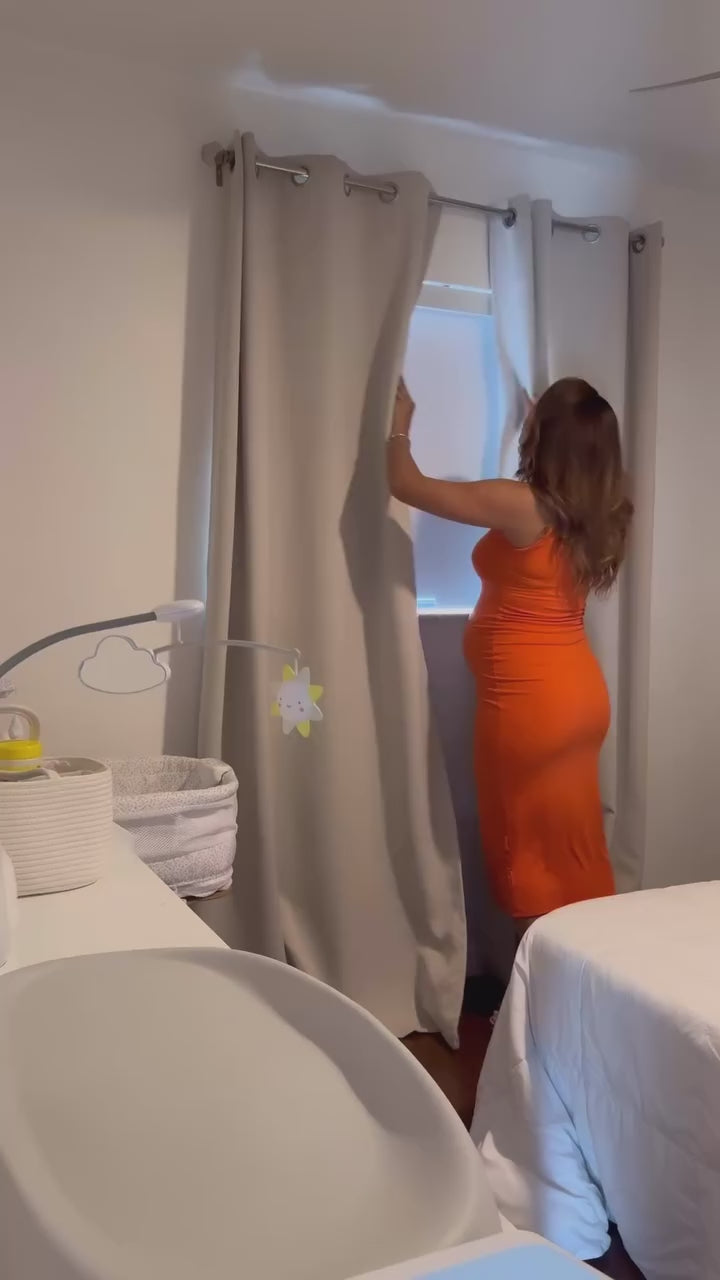
Opacity matters more than the word "roller." A light-filtering fabric softens glare but still glows after sunset. Solar screen fabric can reduce screen glare while keeping part of the view, although nighttime privacy depends on openness and lighting. Blackout fabric is the better bedroom choice, but an inside mount may still leave edge light. An outside mount can cover more of that gap.
AOSKY's current Motorized Blackout Roller Shades are the most direct option when darkness, privacy, and powered lift all matter. Check the live configuration before ordering because motor, power, control, and size choices can change by product. Browse all AOSKY motorized shades to compare options.
Motorized Zebra Shades
Zebra shades run two layers of alternating sheer and opaque bands around a roller. Align the sheer bands for filtered daylight; overlap the opaque bands for more privacy. That makes zebra shades useful in a living room or home office where the light changes hour by hour.
They are not the first pick for a pitch-dark nursery or theater. Even a dark opaque band cannot remove normal light at fabric edges or every gap between layers. Compare the available zebra shade designs for daytime control, then choose a dedicated blackout roller if darkness is the non-negotiable result.
Motorized Cellular Shades
Cellular shades use pleated air pockets between the room and the glass. That structure makes cellular shades a strong candidate beside a cold bed, a sunny nursery window, or a reading chair that feels uncomfortable in winter.
The U.S. Department of Energy describes cellular shades as window attachments that can be operated manually or automatically and can provide heating, cooling, glare, privacy, and comfort benefits. Results depend on the window, product, fit, climate, and operating schedule, so treat insulation as a reason to compare the structure, not as a promised utility-bill number.
Motorized Roman Shades
Roman shades rise into soft horizontal folds instead of rolling around a tube. They bring more fabric texture to a dining room, primary bedroom, or formal living space, even when the shade is open.
Look closely at the raised stack. A deep fold can cover part of the glass, and lined fabric adds weight. For a wide window, confirm the finished weight, maximum motor width, fold style, and whether one large shade or two smaller shades will look and run better. The AOSKY Roman shade collection is a useful place to compare fabric character before checking which selected configurations offer motorization.
Motorized Venetian Blinds
Venetian blinds are the true "blind" in this group: horizontal slats tilt to change the direction of light. That can cut glare without covering the whole window, a useful feature in an office, breakfast area, or street-facing room.
Read the control description carefully. One motorized blind may automate slat tilt only; another may tilt and raise the blind. Wood or faux-wood slats also add weight, so size limits matter. If directional control is the goal, ask for written confirmation of every powered movement rather than assuming "motorized" means both.
How to Choose Motorized Blinds
Choose motorized blinds by working through six decisions in order: room result, shade type, fabric opacity, power source, control method, then measurement and mount. This sequence prevents the common mistake of buying a smart-home protocol first and discovering that the shade is too bright, too heavy, or impossible to charge safely.
1. Name the room problem. Write down the result you need at the hardest time of day: sleep darkness at 6 a.m., screen visibility at 4 p.m., evening privacy, winter comfort, or slat-level daylight control.
2. Pick the physical type. Start with roller for simplicity, zebra for shifting light, cellular for window comfort, Roman for a fabric-forward look, or Venetian for directional control.
3. Choose opacity in the real room. Test fabric beside the window in direct sun and after dark with interior lights on. A screen cannot show nighttime privacy or the exact color cast.
4. Plan power access. Decide whether you can reach a charging port, hide a plug-in cable, wire the window during construction, or keep a compatible solar panel exposed to useful daylight.
5. Choose controls you will use. A remote is enough for one bedroom. Whole-home schedules, voice commands, or scenes justify a compatible hub and network plan.
6. Confirm the exact order. Measure each opening, select inside or outside mount, check depth and handle clearance, then match every claim to the chosen SKU and manual.
Room or window
Strong first choice
Why
Confirm before buying
Bedroom or media room
Blackout roller shade
Simple powered lift and strong fabric-level light blocking
Edge gaps, outside-mount overlap, motor noise
Home office
Zebra or solar roller shade
Adjusts glare without making the room dark all day
Monitor direction, openness, nighttime privacy
Drafty or exposed window
Cellular shade
Air-pocket construction can improve window-side comfort
Cell type, fabric opacity, side gaps
Formal living or dining room
Roman shade
Fabric folds become part of the decor
Raised stack, lining weight, motor limits
High or hard-to-reach window
Roller or cellular shade
Motorization removes daily reaching
Safe charging and future service access
Rental with a suitable frame
No-drill motorized configuration
Avoids holes or wiring when the product, frame, and lease allow
Inside depth, frame condition, lease rules
No-drill is a mounting method, not a separate blind type. A no-drill roller shade can still be blackout, light filtering, manual, or motorized depending on the exact configuration.
Motorized Blind Power Options
Power determines installation work and long-term upkeep. A beautiful shade with an unreachable charging port becomes annoying the first time the battery runs low.
Power option
Best fit
What you gain
What to plan for
Rechargeable battery
Finished rooms, rentals, windows without outlets
Clean installation without permanent wiring
Reachable charging port, charger storage, battery aging
Plug-in motor
Window beside a well-placed outlet
Continuous power with simpler installation than hardwiring
Visible cable, occupied outlet, cable routing
Hardwired motor
New construction or a major renovation
Hidden, dependable power for many windows
Early electrical design and future service access
Compatible solar panel
Supported rechargeable motor with useful window light
Less frequent manual charging in suitable conditions
Motor compatibility, panel placement, seasonal light
Battery power is usually the easiest retrofit. Hardwiring earns its cost when walls are open or when charging many shades would become a maintenance job. Solar charging is an accessory for a compatible battery motor, not a separate window treatment, and shaded windows may still need manual charging.
AOSKY's automatic blinds guide for Minneapolis homes documents rechargeable, plug-in, hardwired, and compatible solar considerations in more detail. Use the exact product manual as the final authority.
Remote vs Smart Controls
Motorized describes powered movement. Smart describes connected control. A remote-only shade is motorized even if it has no app, hub, schedule, or voice assistant.
· RF remote: The simplest daily control. Multi-channel remotes can group several shades, and a paired remote may still work during an internet outage as long as the motor has power.
· Bluetooth: Useful for direct phone control at shorter range when the selected motor offers it. Confirm how many motors the app can manage and whether remote access requires a hub.
· Zigbee: A practical choice for a home that already has a compatible Zigbee hub. The hub decides which commands, schedules, and voice platforms become available.
· Matter: A strong starting point for a mixed Apple Home, Amazon Alexa, Google Home, or SmartThings household, but the shade still needs a supported Matter controller or Thread border router when required.
Protocol names do not prove compatibility. Check the motor model, hub model, device type support, firmware, account region, and coverage at the actual window. AOSKY's smart shade compatibility guide lays out current paths for Alexa, Google Home, and Apple Home.
Keep the physical remote. Apps, accounts, routers, and hubs change more often than window fabric does.
Measuring, Mounting, and Safety
Measure every opening separately, even when the windows look identical. For an inside mount, depth, squareness, handles, and deductions matter. For an outside mount, decide how much overlap you need for privacy and room darkening. Follow the AOSKY measuring guide rather than subtracting an allowance on your own.
Motorization can remove an operating chain, but the word "motorized" alone does not prove the complete product is cordless. The U.S. Consumer Product Safety Commission recommends cordless window coverings when young children are present. Verify that the ordered shade has no accessible operating cord, then keep remotes, chargers, batteries, and cables out of reach.
Before checkout, record four facts for every shade: finished size, mount, power path, and control path. Also decide who owns measuring, installation, electrical work, pairing, and future troubleshooting. If any answer changes by color, width, or motor choice, save the final configuration page with the order.
FAQ
How much do motorized blinds cost?
The total depends on window size, fabric, motor, remote or hub, power hardware, and installation. Use AOSKY's motorized blinds cost guide to compare line items, then price the exact configuration rather than relying on a broad per-window average.
What are the disadvantages?
Motorized blinds cost more than manual shades and add batteries, chargers, remotes, hubs, firmware, and repair parts. Poor charging access or a mismatched smart-home protocol can turn convenience into upkeep.
What is the best type?
Roller shades are the best general-purpose choice because they are simple, compact, and available in several opacity levels. Choose zebra for adjustable daylight, cellular for window comfort, Roman for fabric style, or Venetian for directional light.
Do motorized blinds need internet?
Remote-only motorized blinds do not need internet. App access, voice assistants, away-from-home control, and some schedules may require a compatible hub, local network, cloud service, or internet connection.
Will they work in an outage?
A charged battery shade may keep working during a building outage, while plug-in and hardwired motors need backup power. During an internet outage, a paired RF remote can work if the motor has power and its pairing does not rely on an online service.
Once you have narrowed the physical type, compare AOSKY fabric samples at your window, measure the opening, and verify the motor and controller on the exact product page. That last check is what turns a promising motorized blind into one that works in your room every day.