

How Long Should Roman Shades Be? A Complete Measurement Guide
Getting the right length for your roman shades makes all the difference between a polished look and an awkward fit. We've helped countless customers find the perfect measurements for their windows, and we're here to walk you through the process step by step.
The length of your roman shades depends on two main factors: whether you're mounting them inside or outside the window frame, and what look you're going for. There's no one-size-fits-all answer, but once you understand the basics, measuring becomes pretty straightforward.
Inside Mount: Measuring for a Clean Fit
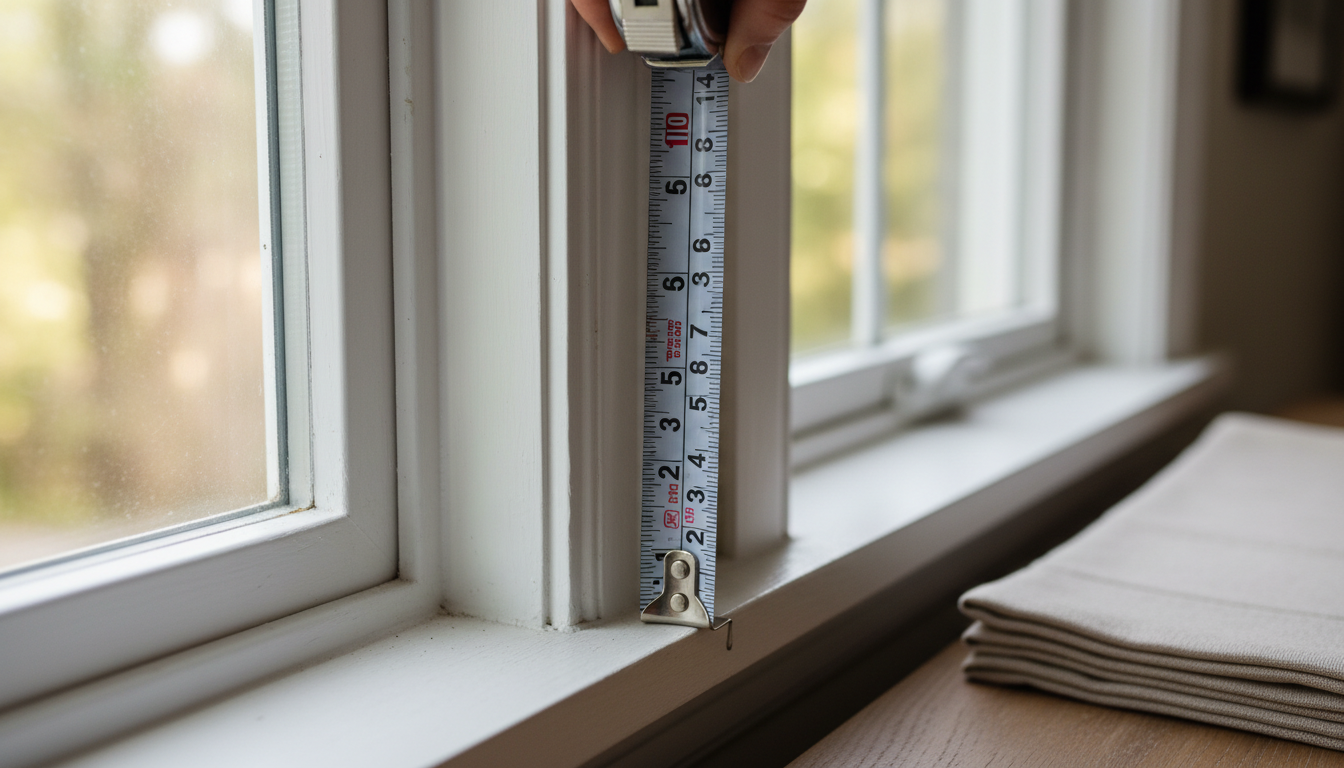
For inside mount roman shades, you'll measure the vertical height from the top of your window frame straight down to the sill. But here's the thing – windows aren't always perfectly square.
Take three separate measurements: one on the left side, one in the center, and one on the right. You'll want to use the longest of these three measurements when placing your order. This accounts for any unevenness in your window construction.
Measure to the nearest 1/8 inch and round up if you're between measurements. Don't try to make your own deductions – manufacturers typically subtract about 1/4 to 3/8 inch from your measurements to make sure the shade fits properly inside the frame without binding.
Your window frame needs to be at least 2 1/2 inches deep for standard roman shades to mount inside properly. Motorized versions need about 4 inches of depth. If your frame isn't deep enough, you'll need to go with an outside mount instead.
Outside Mount: Adding Length for Coverage
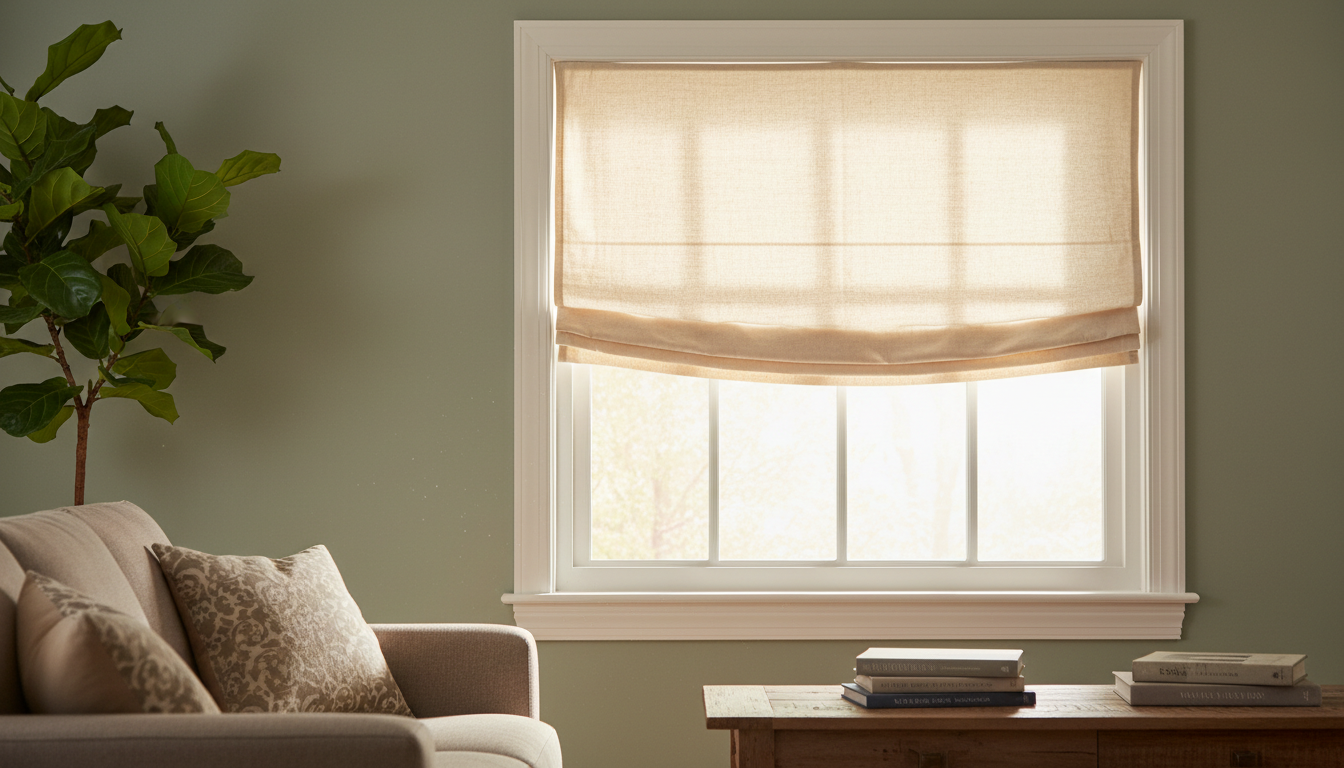
Outside mount shades give you more flexibility with length. These shades mount on the wall or trim above your window, covering the entire frame.
For the best coverage and light control, we recommend extending your shade at least 2-3 inches above the window frame and 2-3 inches below the sill. Some designers prefer going even longer – 10-12 inches above the frame creates a dramatic look and makes your windows appear taller.
Measure from where you want the headrail to sit down to where you want the shade to end. If you have a protruding sill, you might need to stop at sill level so the shade can operate smoothly. Otherwise, dropping 2-6 inches below the sill gives you better light blocking.
Outside mount measurements are made to your exact specifications – what you order is what you get. There are no manufacturer deductions, so measure carefully.
Width Considerations That Affect Length
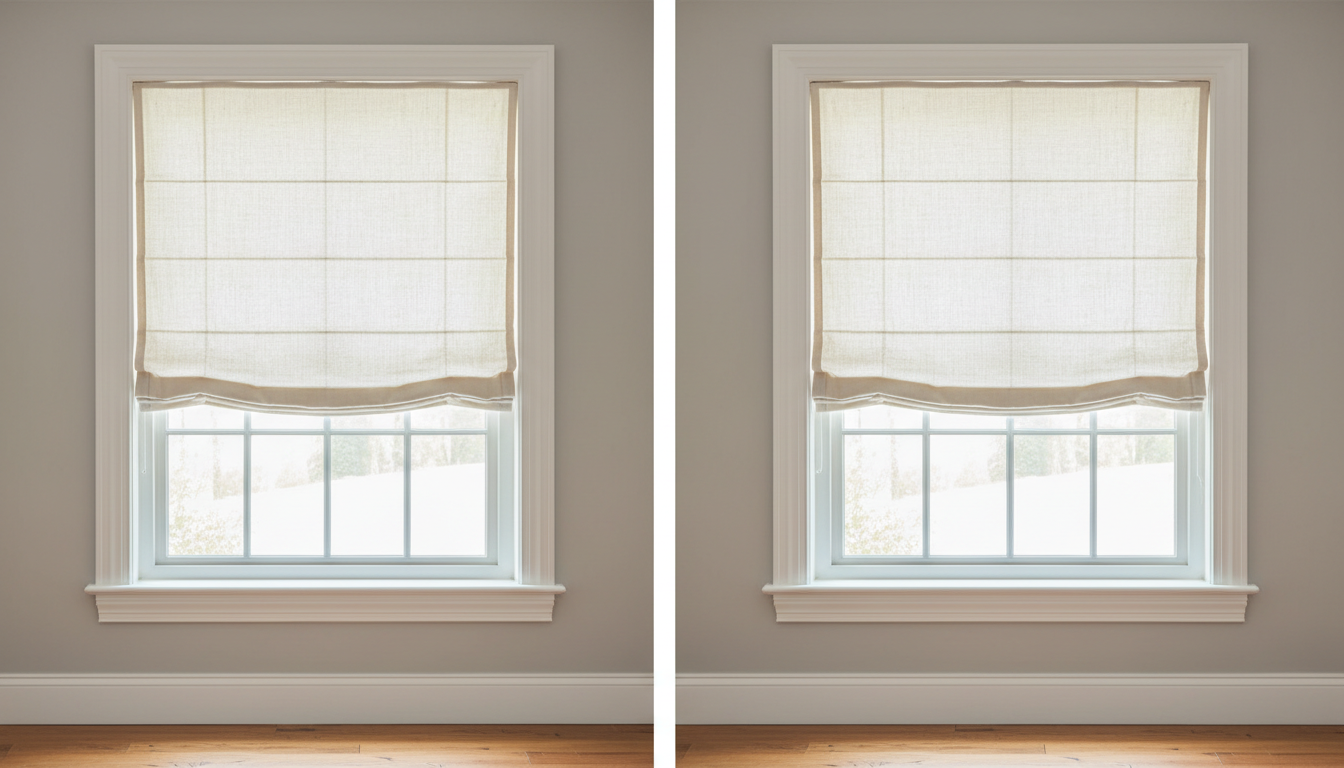
While we're focused on length, width plays a role too. For inside mounts, measure the width at the top, middle, and bottom of your window frame. Use the narrowest measurement.
For outside mounts, measure across the area you want to cover. We suggest adding 2-3 inches on each side of the window frame to prevent light gaps and give better privacy.
If you're ordering shades for multiple windows in the same room, order them all at the largest height measurement. This keeps the pleat sizes consistent, which looks much better than having different pleat patterns on each window.
Common Length Mistakes to Avoid
Don't round measurements to the nearest half inch or whole inch – you need that 1/8 inch precision. Also, never assume windows are the same size just because they look identical. Measure each one separately.
Watch out for window hardware like handles or cranks. Your shade needs clearance to operate without hitting anything. If you have obstacles, an outside mount positioned higher up might work better.
Another mistake? Forgetting about the stacked height when the shade is fully raised. Roman shades can take up 10-15 inches of vertical space when open, depending on the style and length. If you want maximum light when the shade is up, mount it higher or choose a different shade style that stacks more compactly.
Special Situations and Custom Lengths
Small windows benefit from outside mount shades that extend beyond the frame – this makes the window look bigger and the ceiling appear higher. For large windows, you might be wondering about maximum length. Most roman shades can be made up to 100-120 inches long, though very large shades may need motorization to operate smoothly.
If you're layering window treatments, plan your lengths carefully. Outside mount roman shades work well over inside mount cellular shades or roller shades for extra light control. Just make sure your window frame is deep enough for both.
Can roman shades be longer than your window? Absolutely. Ready-made shades with extra length still function fine – you'll just have more fabric at the bottom, which can actually help with light blocking and give you flexibility during installation.
How to Choose Between Standard and Custom Lengths
Standard roman shades come in common lengths like 48, 60, 72, and 84 inches. These work great if your windows are close to these sizes. Custom shades cost more but give you the exact fit you want.
For inside mounts, custom is usually worth it – even being off by an inch can create light gaps or prevent smooth operation. For outside mounts, you have more wiggle room with ready-made sizes since you control exactly where you mount them.
Browse our full selection of roman shades to see what lengths and styles work for your space. We also have a helpful pattern guide if you're deciding on fabric.
Tools You'll Need for Accurate Measurements
Grab a steel tape measure – cloth ones can stretch and give you wrong numbers. You'll also want a pencil and paper to record your measurements, and a step ladder if your windows are high.
For extra accuracy, a laser measuring tool works great and saves time, especially if you're measuring multiple windows. Just point and click for instant readings.
Measure at least twice before ordering. And if you're not confident about your measurements, many companies offer professional measuring services – it's worth considering for expensive custom shades.
Conclusion
The right length for your roman shades depends on your mounting style, window size, and design goals. Inside mount shades should measure from the top of your window frame to the sill using the longest of three measurements. Outside mount shades work best when they extend 2-3 inches beyond the window frame on all sides, though you can go longer for more dramatic effect.
Measure to the nearest 1/8 inch, account for any obstructions, and order multiple windows at the same height for uniform pleats. With these guidelines, you'll get shades that fit perfectly and look great for years to come.
FAQs
Q: Should roman shades touch the window sill or go below it?
A: For inside mount shades, they should end at the window sill. For outside mount shades, dropping 2-6 inches below the sill gives better light control and looks more finished. If you have a protruding sill, you might need to stop at sill level so the shade can raise and lower smoothly.
Q: What's the minimum window depth needed for inside mount roman shades?
A: You need at least 2 1/2 inches of depth for standard roman shades, 2 3/4 inches for woven wood styles, and 4 inches for motorized shades. Measure from the front of your window frame to the glass. If your window isn't deep enough, go with an outside mount instead.
Q: Can I order roman shades longer than my window measurements?
A: Yes, roman shades can be longer than your actual window, especially for outside mounts. The extra length gives you more coverage and light blocking. Ready-made shades with extra length will still work fine – you just mount them where you want and let the extra fabric hang at the bottom.
Q: How much space do roman shades take up when fully raised?
A: When fully open, roman shades typically stack to about 10-15 inches tall, depending on the shade length and fold style. Longer shades create bigger stacks. If you want maximum light when shades are open, mount them higher above the window frame to keep the stack from blocking the glass.
Q: Should I use the same length for all windows in one room?
A: If your windows are similar heights, order all shades at the largest measurement you recorded. This keeps the pleat sizes uniform across all shades, which looks much better than having different pleat patterns. Even small differences in length can create noticeably different pleat spacing.
Share