
Home
/
Buyer Guide for Shades & Blinds
/
Inside Mount vs Outside Mount Roman Shades: Which Works Best?

Inside Mount vs Outside Mount Roman Shades: Which Works Best?
Roman shades bring warmth and style to any room, but there's one decision that can make or break your window treatment plan: should you mount them inside or outside the window frame? We get this question all the time, and honestly, there's no one-size-fits-all answer. Your choice depends on your window depth, light control needs, and the look you're going for. Let's break down everything you need to know about inside mount vs outside mount roman shades so you can make the right call for your home.
What's the Difference Between Inside and Outside Mount?
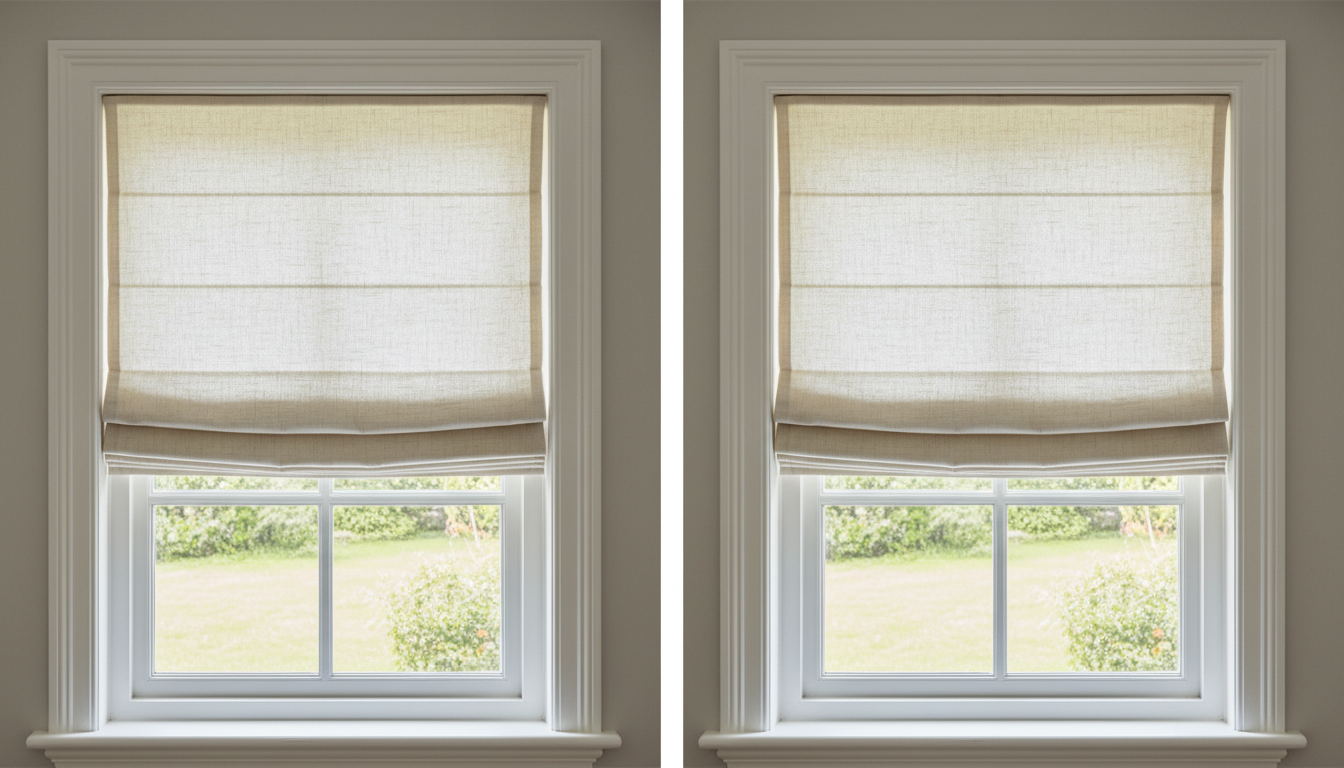
Before we get into the pros and cons, let's make sure we're on the same page about what these terms mean.
Inside mount means your roman shades fit inside the window frame itself. They're attached to the ceiling of the window casing, sitting flush within the recess. This creates a clean, tailored look that shows off your window trim.
Outside mount means the shades are installed on the wall or ceiling above and around the window frame. They cover the entire window opening and then some, extending beyond the frame for fuller coverage.
Both options work beautifully—it just depends on what your space needs.
Inside Mount: The Clean, Tailored Option
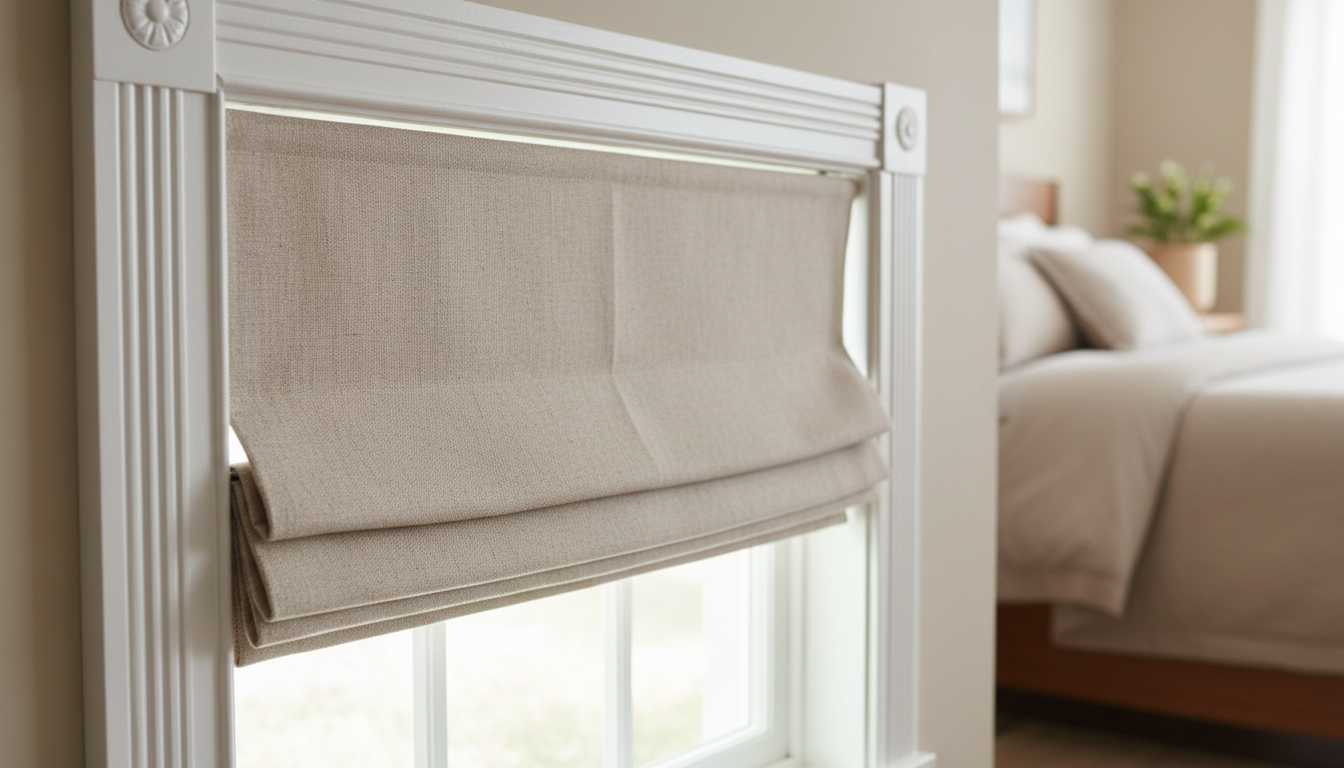
Inside mount roman shades give you that custom, built-in look. They sit perfectly within your window frame, which works well if you've got decorative trim you want to show off.
The benefits? They create a sleek, minimalist appearance without adding bulk to your wall space. If you're planning to layer your shades with curtains or drapes, inside mount is usually the way to go. The shades stay compact within the frame while your drapes hang over the entire window for a layered, polished look.
But here's what you need to know: inside mount shades need depth. Most require at least 1.25 to 2 inches of window frame depth to mount properly. If your window frame is too shallow, this option won't work. And because the shade needs a bit of clearance to move up and down smoothly, you'll notice small light gaps on the sides—usually about a quarter inch on each side. For light sleepers or anyone who needs total darkness, those slivers can be a dealbreaker.
You'll also lose a bit of window view since the shade stacks inside the frame when raised. Small windows can feel even smaller with inside mount shades.
Outside Mount: More Coverage, More Flexibility
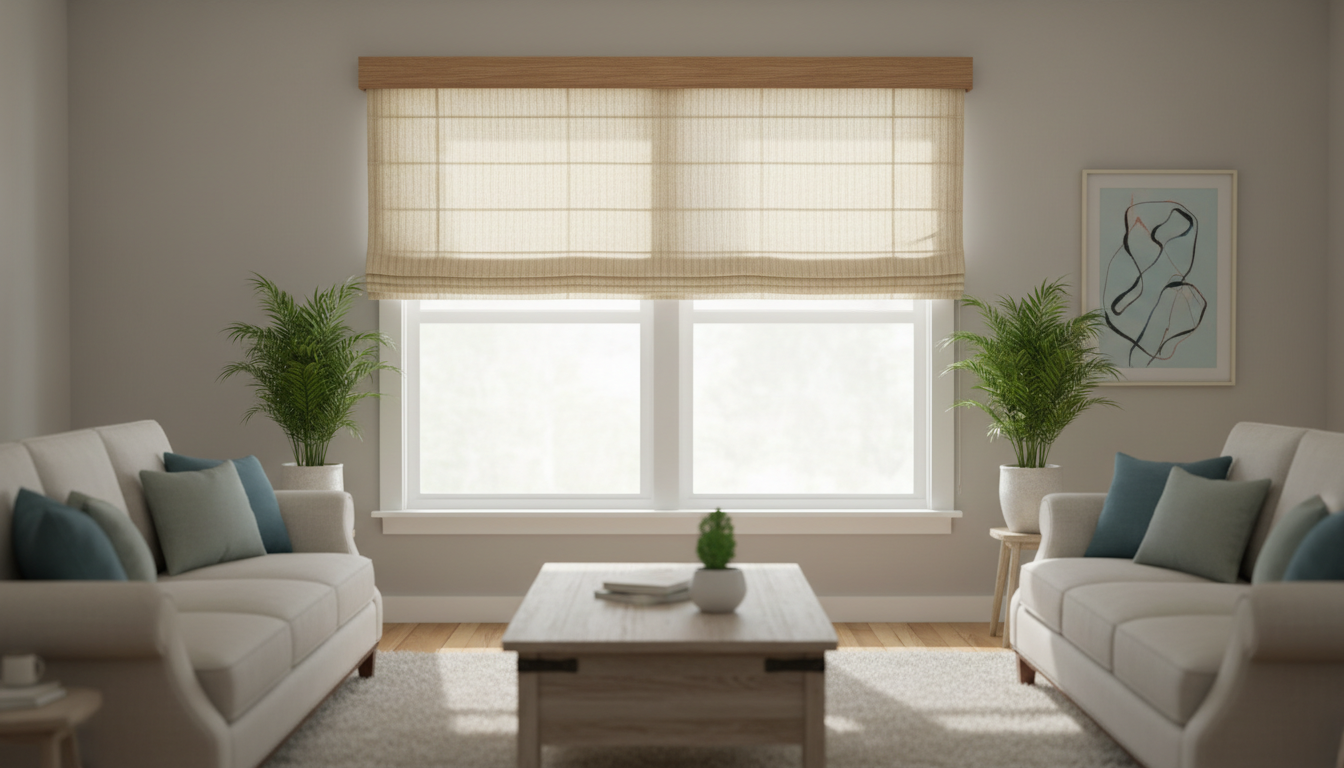
Outside mount roman shades are mounted on the wall or ceiling around your window frame. They're a go-to solution when your window frame is too shallow for an inside mount, or when you want more light control.
One of the biggest perks? Better light blocking. Since the shade extends beyond the window frame—typically a few inches on all sides—you get way more coverage and fewer light gaps. That makes outside mount shades a smart pick for bedrooms, nurseries, or any room where you want to keep things darker.
Outside mount also gives you some design tricks up your sleeve. By mounting the shade higher and wider than the actual window, you can make small windows look bigger and low ceilings feel taller. It's a simple visual hack that can change how your whole room feels.
Another bonus: no depth requirements. Since the shade mounts on the wall, you don't need to worry about whether your window frame can handle it. This makes outside mount perfect for shallow windows, odd-shaped windows (like arched or round ones), or older homes where the trim might be uneven.
The trade-off? Outside mount shades will cover your window trim. If you've got beautiful molding you want to highlight, that's something to consider. They also project a few inches from the wall, which might feel bulky in tight spaces. And the hardware is more visible compared to the hidden look of inside mount.
How to Choose: Inside or Outside?
Here's how we think about it when helping customers decide.
Go with inside mount if:
- Your window frame has at least 2 inches of depth
- You want to show off decorative trim or molding
- You're layering shades with drapes
- You prefer a clean, minimalist look
- Light gaps on the sides won't bother you
Go with outside mount if:
- Your window frame is shallow (less than 1.25 inches deep)
- You need better light control and fewer gaps
- You want to make small windows or low ceilings appear larger
- Your window trim isn't something you want to highlight
- You have oddly shaped windows (arched, round, angled)
- You want to mount the shade high enough to clear the window completely when raised
Still stuck? Think about the room's purpose. Bedrooms often benefit from outside mount because of the light blocking. Living rooms and dining rooms where you want to showcase architectural details? Inside mount usually wins.
Quick Comparison: Inside vs Outside Mount
| Feature | Inside Mount | Outside Mount |
|---|---|---|
| Appearance | Clean, tailored, flush with frame | Bold, covers trim, makes windows look larger |
| Depth Required | Yes, at least 1.25-2 inches | No depth requirement |
| Light Control | Good, but small side gaps | Better, fewer light gaps |
| Best For | Showing off trim, layering with drapes | Shallow frames, small windows, better light blocking |
| Installation | Inside window frame | On wall or ceiling around frame |
Measuring Tips for Both Styles
No matter which mount you choose, accurate measurements make all the difference.
For inside mount, measure the width and height of the window opening at three different points (top, middle, bottom for width; left, center, right for height). Use the smallest measurement—windows aren't always perfectly square. And don't forget to check your depth to make sure you've got enough room for the mounting hardware.
For outside mount, decide how much coverage you want beyond the window frame. We typically recommend extending 2-4 inches on each side and 2-3 inches above the frame. Measure the width and height based on where you want the shade to sit, not the actual window size.
If you're not confident with measurements, that's totally normal. Most mistakes happen here, and getting it wrong can mean shades that don't fit. Consider getting a professional measurement if you're unsure.
Conclusion
Choosing between inside mount vs outside mount roman shades comes down to your window's depth, your light control needs, and the aesthetic you're after. Inside mount gives you that sleek, custom look and highlights your window trim, but it requires adequate frame depth and leaves small light gaps. Outside mount offers better light blocking, works with any window depth, and can make your windows look larger—but it covers your trim and projects from the wall.
There's no wrong choice here, just the right choice for your specific situation. Take a good look at your windows, think about how you use the room, and go from there. And if you want to explore your roman shade options, we're here to help you find exactly what you need. For more window treatment insights, check out our guide on cordless blinds to see if that safety feature might work for your home too.
FAQs
Can you switch from inside mount to outside mount later?
Yes, but you'll need new shades made to the outside mount dimensions. Inside mount shades are sized to fit within the window frame, while outside mount shades need to be wider and taller to extend beyond it. The mounting hardware is also different, so you can't just remount the same shade.
Do inside mount roman shades block light as well as outside mount?
Not quite. Inside mount shades leave small gaps on the sides (about 0.25 inches) so the shade can move freely. Outside mount shades extend beyond the window frame, covering more area and blocking more light. If you need near-total darkness, outside mount is your better bet.
What if my window frame isn't deep enough for inside mount?
Go with outside mount—it doesn't require any frame depth since it mounts on the wall or ceiling. This is a common situation in older homes or with certain window styles, and outside mount works just as beautifully.
Which mounting style is more popular?
Inside mount tends to be more popular because people like the clean, tailored look and the way it showcases window trim. But outside mount is gaining ground, especially in bedrooms and for anyone who wants better light control or needs to work around shallow frames.
Can I use outside mount shades if I want to layer them with curtains?
Absolutely. Just make sure to mount your curtain rod high enough and with enough projection so the curtains clear the shades when they're lowered. Outside mount shades paired with drapes can create a really rich, layered look—just plan your spacing carefully.
Share